What actually happens in a first session
Most people arrive at the first appointment carrying two things: whatever brought them, and the worry that they will not know how to say it. Here is the whole hour, in plain terms, so one of those can be put down before you walk in.
When Your Body Changes Everything: How to Process the 'Before and After' of a Health Crisis
Most people arrive at the first appointment carrying two things: whatever brought them, and the worry that they will not know how to say it. Here is the whole hour, in plain terms, so one of those can be put down before you walk in.
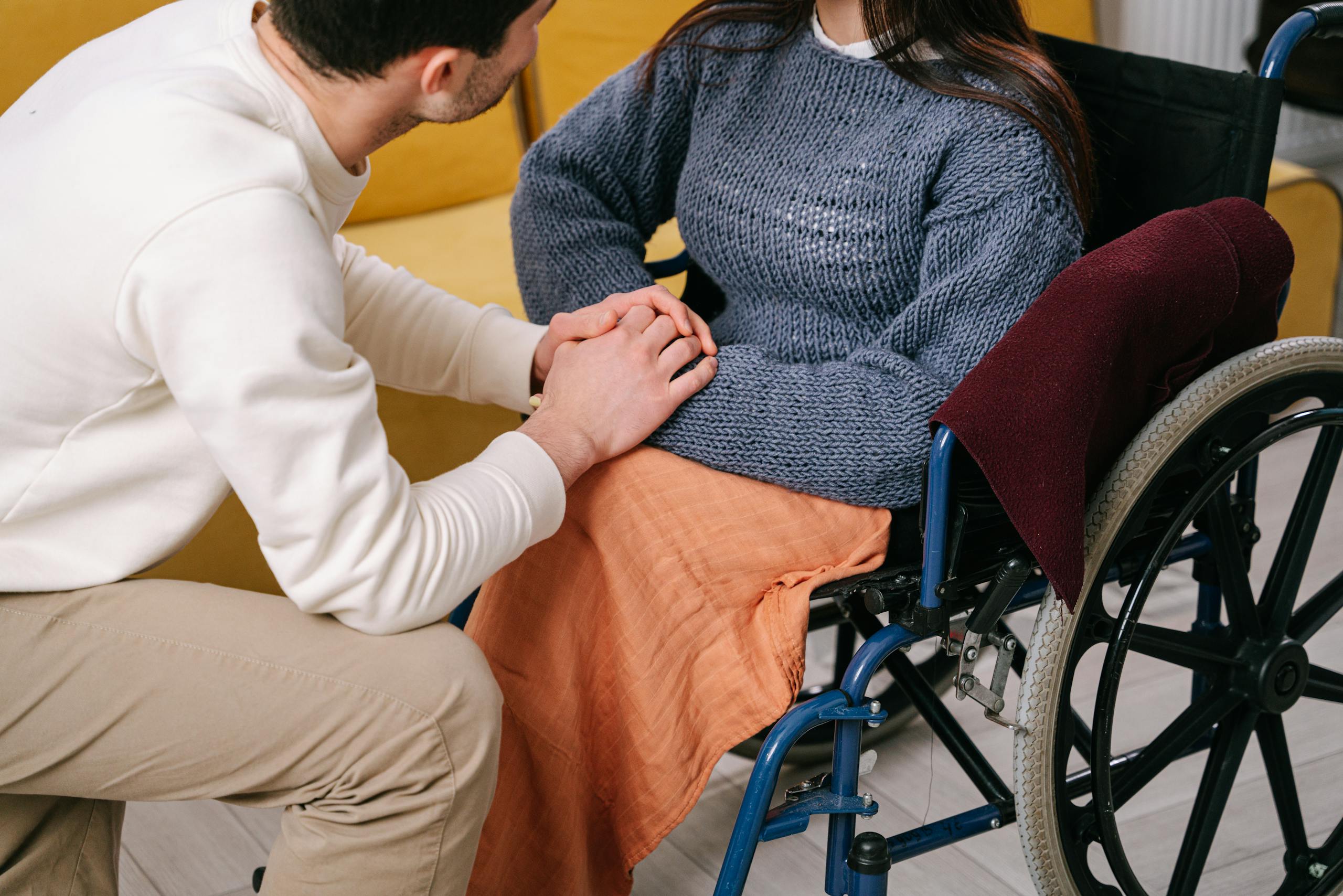
You wake up, and for a split second, everything is fine. The world feels familiar. In that tiny, honeyed gap between sleep and consciousness, your body is just a body – a quiet vessel resting safely beneath the blankets. But then, realization hits. Sensations flood in: a sharp, electric pinch in your lower back; a heavy fog clinging to the back of your eyes; or a pervasive, bone-deep fatigue that feels like you’ve woken up wearing a suit of lead. In a heartbeat, the "before" version of your life evaporates, and you are pulled back into the "now" – a reality where your body has rewritten the rules without asking your permission.
You’ve probably already started the scan. It’s a ritual now, isn't it? Before your eyes even open, you’re checking the "weather report" of your joints and nerves. You’re doing the math: How much of me is available today? What can I afford to dedicate my energy to? What has to be cut from the list? It’s a painful, quiet inventory of capacity vs. desire.
It’s more than just physical discomfort; it’s the quiet, persistent weight of realizing that the person you were six months or six years ago is standing on the other side of a glass wall. Whether your journey began with the seismic shock of a diagnosis or the slow, creeping onset of unexplained symptoms, the emotional impact is the same: you are learning to navigate a world that feels increasingly designed for a version of you that no longer exists.
Naming the Open-Ended Loss
When health is discussed in a clinical setting, the focus is almost always on "getting better" or "staying positive." It’s a short-term lens for a long-term reality. But when recovery isn't a straight line, those phrases can feel like a secondary injury. You are navigating an ongoing condition where symptoms dictate the terms of your life. To understand the weight of this "in-between" state, we have to name it for what it truly is: ambiguous loss.
Grief is a healthy response to any loss, but in chronic illness, that loss is "open-ended." It isn't the death of a person; it’s the loss of a version of yourself. It is the grief of being physically present but functionally different. This type of sorrow is rarely acknowledged by society, which leaves you isolated in your mourning. It is a recurring grief. Every time a flare-up forces you to cancel plans, you feel that loss all over again.
This loss lives in the small, exhausting choices made every day—the "social battery tax." Because of your symptoms, socializing costs significantly more energy for you than it does for everyone else. You might find yourself staring at an invitation to a family gathering with a sense of dread— It isn’t that you don’t want to go; it’s that you have to conduct a complex internal audit first.
You calculate the metabolic cost of the commute and the sensory weight of the room. You rehearse your social script, deciding how much of your reality to reveal to people who might not understand. Perhaps there is a weariness in being "the sick one"—the relative everyone remembers only for their diagnosis, the one they immediately try to "fix" with unsolicited solutions. You calculate the recovery time you’ll inevitably need afterward. Before, you would go without a second thought. Now? Joy and connection have a budget.
The Uncomfortable Gap
Beyond the logistics, there is a deeper shift happening: an uncomfortable gap between who you want to be and what your body allows. Perhaps you were always the "reliable one." Now, it feels like a betrayal of your own character when you have to ask for help or decline a project. You may find yourself "pushing through," not for society, but because you deeply want to show up for your own life. Yet, the very effort required to "show up" can be so depleting that it leaves you with nothing left for yourself.
Alternatively, the weight of this effort can lead to withdrawal. While pulling back feels like protection, it often leaves you in a quiet, hollow space — safe, but devoid of the meaning and connection that make life feel like yours.
Reclaiming the Control Panel
While you cannot always fix the biological hardware of illness, you can begin to reclaim power by shifting the lens. Think of your well-being as a control panel with different "levers" you can pull to influence your experience:
- The Biological: This is the literal biological weather report — your genetics, your nervous system, and the physical symptoms themselves. You have some influence here in how you care for yourself, but let's be honest: many of these factors remain stubbornly outside of your control.
- The Psychological: This is how you perceive those symptoms — your thoughts, your history, and the emotional strategies you use to cope. This is the lever where you have the most agency. It takes time and effort, but you can choose the lens through which you view yourself and your story.
- The Social: This is your environment — the support of friends, the accessibility of your world, and the societal pressures you face. You have influence here too. This is where community comes into play; supportive friends, family, and coworkers act as safety signals to your system.
When you feel stuck, it’s usually because you are trying to pull a lever that won't easily budge: the Biological. During a flare-up, your nervous system enters a state of "high alert." It’s an ancient survival mechanism, but in chronic illness, it becomes an exhausting feedback loop. The more stressed or isolated you feel, the more sensitive your nerves become. This can actually amplify the physical sensations you feel.
The power of this model lies in the reminder that there are other levers — the Psychological and the Social — you can pull on to move forward, even when your body refuses to cooperate.
Negotiating for Safety
The psychological lever isn’t about "thinking your way out of pain"—which is both impossible and dismissive of your lived experience. Instead, it is about negotiating with your brain’s alarm system.
When pain is constant, your nervous system naturally enters a state of high alert. It begins to broadcast an emergency signal, leading to thoughts like "This will never end" or "I can't cope with this." These aren't just "negative thoughts." They are your brain’s way of trying to protect you by sounding the loudest alarm possible. However, the more your brain perceives a state of emergency, the more it "sensitizes" your nerves. This can inadvertently turn up the volume of the physical pain.
You can influence this by offering your nervous system more accurate data to help it feel slightly safer. This doesn't mean pretending the pain isn't there. It means acknowledging the pain while also acknowledging your capacity to survive it.
For example, when the brain screams, "This is too much," you don't have to counter it with a lie. Instead, you can provide a grounded observation: "This is a lot, and my system is overwhelmed right now. I don’t need to solve the whole day; I just need to find one thing that makes the next ten minutes feel 1% more manageable." This shift doesn't remove the biological signal, but it helps lower the "threat level" in your system. By moving from a state of emergency towards a state of validation, you can help your nervous system lower the emotional barrage.
Practices for the In-Between
To help lower that internal "distress signal" even more, you can integrate small, low-impact practices into your daily scan. These aren't meant to "fix" the pain, but to provide your system with the grounding it needs to carry it:
- Name It to Tame It: When physical pain is high, it often "bleeds" into your emotions. Try to gently disentangle them by labeling the specific emotion attached to the sensation. Is it "The Loneliness of the Flare" or "The Frustration of the Fog"? By naming the emotion, you create a small, vital distance. It reminds your system that while you are experiencingpain, you are not the pain.
- Supportive Touch (Somatic Self-Soothing): When your nervous system is in a state of high alert, you can use the power of your own touch to signal safety to the brain. Try placing one hand on your chest and the other on your belly, or gently cupping your own face. Feel the warmth and the slight pressure of your hands. This simple act of "witnessing" your own body with kindness can help down-regulate the threat response, shifting you from "emergency" toward "safety."
- Peripheral Softening: Pain often causes us to "tunnel" our vision and tighten our focus, which reinforces a state of stress. To counter this, try to soften your gaze. Without moving your head, allow your awareness to expand to the far edges of your vision—the corners of the room or the space to your left and right. Expanding your field of view tells the brain that there is no immediate, localized threat, allowing the system to exhale.
- Finding the Essence: When a flare-up prevents you from reaching a goal—like going for a walk—it can feel like a loss of identity. To ground yourself, identify the value behind that goal. If the goal was a nature walk, can you sit by an open window? Taking an action that aligns with the spirit of your value, however small, reinforces a powerful truth: you are still the same person, even if the "how" has to change for today.
- Celebrate the small wins: On low-capacity days, the brain tends to filter out everything except what you couldn't do. Try keeping a "done list" instead of a "to-do" list. Documenting every small victory—refilling your water, taking your medication, or choosing to rest—shifts the narrative. Each entry is evidence of your agency and a win that deserves to be acknowledged.
Your worth is not a variable that fluctuates with your energy levels. Chronic illness may have changed the "how" of your life, but it has not changed the "who." Be as gentle with yourself as you would be with a dear friend navigating the same storm. You are doing enough, even on the days when all you did was breathe. By choosing to honour your values in whatever way your body allows today, you are doing more than just 'coping'—you are actively reclaiming your story, one small, celebrated win at a time.