
What actually happens in a first session
Most people arrive at the first appointment carrying two things: whatever brought them, and the worry that they will not know how to say it. Here is the whole hour, in plain terms, so one of those can be put down before you walk in.
What is a Trauma Response? 4 Types of Responses to Trauma
Most people arrive at the first appointment carrying two things: whatever brought them, and the worry that they will not know how to say it. Here is the whole hour, in plain terms, so one of those can be put down before you walk in.

As a Registered Social Worker and Psychotherapist, clients are often seen who have experienced deeply painful or distressing events. Sometimes these are singular incidents, while other times they occur repeatedly over many years. A common question in therapy is: How do I know if what happened to me is considered trauma?
If you’ve ever felt overwhelmed by memories, emotions, or triggers that bring you back to a painful experience, you’ve experienced trauma. Trauma can leave lasting marks on both your body and mind, causing automatic responses that aim to shield you from further harm. These are called trauma responses, and they can show up in your daily life, affecting your relationships, work, and sense of self. Understanding these trauma responses is key to breaking free from the patterns that hold you back.
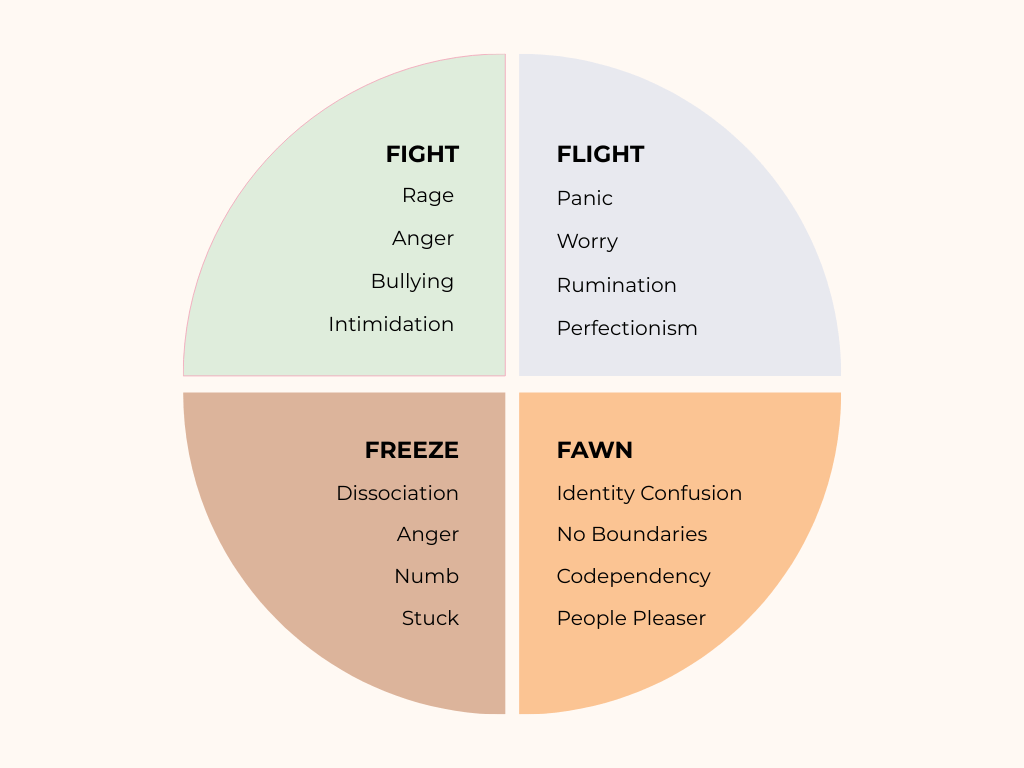
The four most common trauma responses are often referred to as the 4F’s: fight, flight, freeze, and fawn. Stressful or traumatic events, perceived danger, or threats to safety can all activate these biological and psychological reactions. Even long after a traumatic event has ended, the body and mind may still be triggered into reacting as though the danger is present. Recognizing what is happening is often the first step toward change.
Fight
The fight response arises when the body perceives a threat and instinctively reacts with aggression. Physiological changes include a rush of adrenaline, increased heart rate, shallow breathing, muscle tension, and an overwhelming urge to lash out. This can present as sudden anger, physical altercations, or verbal arguments.
Common signs include:
- A rush of adrenaline
- Increased heart rate
- Shallow breathing
- Muscle tension
- Intense anger or irritability
- Urges to lash out physically or verbally
- Getting into arguments or altercations
Flight
A flight response triggers the urge to run away from the threat to try to save yourself. Like "fight" mode, a flight response can lead to a rush of adrenaline and increased heart rate as your body prepares to get out of a situation by running away. You may have a sudden urge to flee, leave, or avoid the person or situation. For example, if you are having a disagreement with your partner, you would rather avoid the confrontation than try to fix the problem.
Common signs include:
- A surge of adrenaline
- Rapid heartbeat
- Restlessness or pacing
- Feeling trapped or needing to escape
- Urges to flee or avoid people, places, or situations
- Avoiding conflict or confrontation (e.g., walking away from a disagreement rather than addressing it)
Freeze
While fight and flight are both active stress responses that increase the biological activity in your body, freezing is your body’s way of shutting down. Similar to an animal “playing dead,” freeze occurs when fighting or fleeing does not feel possible. The freeze response causes your body to decrease its heart rate, dissociate (i.e., feel detached from yourself and the environment), feel numb, hold your breath, and/or not be able to make a decision or an action. According to research, the freeze response is linked to high levels of anxiety and trauma. People who have experienced sexual assault and domestic violence commonly report resorting to the freeze response during a stressful event.
Common signs include:
- Slowed heart rate
- Feeling numb or disconnected
- Holding one’s breath
- Dissociation (detachment from body or surroundings)
- Inability to make decisions or take action
- Feeling paralyzed or “stuck”
- Sense of time slowing down during stressful events
Fawn
In my therapy practice experience, the fawn response seems to be less well-known of the trauma responses. When it feels safer to be submissive and obedient than fight or flee, some traumatized people may turn to the fawn stress response. Most like the freeze response, "fawning" causes someone to please and appease the needs of someone else, instead of prioritizing their own well-being. The research says that this response is common in abusive situations. For example, a child with an emotionally abusive parent might find that being agreeable is safer than fighting back. Other signs that a fawn response is happening include being a people-pleaser, having a hard time saying “no”, not being able to set boundaries, and putting others’ needs before your own.
Common signs include:
- People-pleasing behaviour
- Difficulty saying “no”
- Struggles with setting or maintaining boundaries
- Putting others’ needs before personal well-being
- Submissive or overly compliant behaviour
- Seeking approval to avoid conflict
- Feeling responsible for others’ emotions or comfort
While these responses can help you in the short-term to cope with various stressors or stay safe when faced with danger, they can also become overactivated and chronic, resulting in negative physical and mental health challenges. Recognizing these responses is an important part of healing and developing healthier coping strategies.
Support from a trained professional can help in navigating these responses and beginning the healing process.
Leanne Eby
Leanne brings nearly 20 years of frontline experience and specializes in supporting individuals of all ages navigating anxiety, depression, stress, and trauma. With advanced training in psychology and a particular focus on anxiety disorders, she draws on CBT, DBT, mindfulness, and EMDR to provide personalized, compassionate care. She also offers creative, child-centred therapy tailored to children's unique needs, interests, and developmental stages.